A new cotton T-shirt may fit perfectly in the fitting room, then feel noticeably tighter after laundry day. The sleeves can shorten, the collar may curl, and the fabric can lose its smooth shape. This common problem raises an important question: why do cotton t-shirts shrink and how to prevent it? Understanding the fabric makes the answer easier to apply.
Cotton is a natural fiber made from cellulose. During manufacturing, machines stretch and arrange these fibers into yarn and fabric. Heat, moisture, and strong movement can release some of that tension. The fibers then draw closer together, especially during a hot wash or high-heat tumble dry. Cotton jersey, used in many T-shirts, can also change because its knitted loops relax. Pre-shrunk cotton usually shrinks less, but it is not completely shrink-proof.
Care labels provide the most reliable starting point. Wash cotton shirts in cool or cold water, and choose a gentle cycle when practical. Avoid overloading the drum. Tight packing creates extra rubbing and reduces effective rinsing. Use low heat, or air-dry the shirt flat on a clean towel. Reshape the shoulders, sleeves, and hem while the fabric is damp. Small habits matter.
Still, no method guarantees zero shrinkage. I have seen two similar shirts respond differently because their yarns, dyes, and finishing treatments were not identical. That detail is easy to overlook. A careful routine can reduce change, but the garment’s construction remains part of the result. This guide explains the causes, warning signs, washing choices, and practical prevention methods in clear terms.
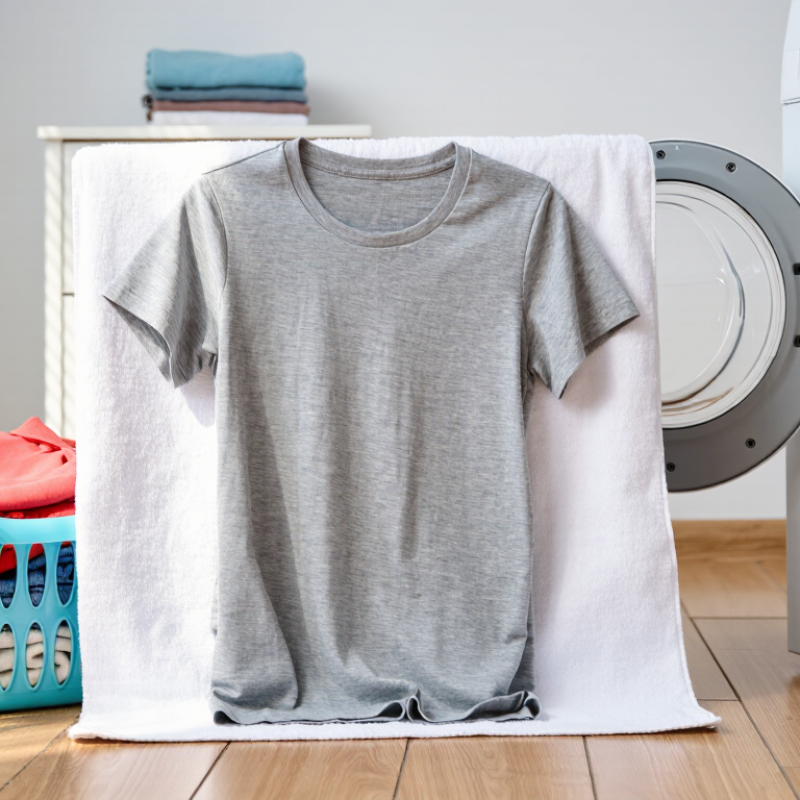
Cotton T-shirts shrink because cotton fibers relax after spinning, knitting, and finishing. During production, tension stretches the yarn and fabric. Water allows the fibers to swell and release that tension. Heat and tumbling then accelerate the movement. Cotton Incorporated’s textile guidance commonly reports 3–5% shrinkage for untreated cotton, although poorly stabilized garments may shrink more. That change can shorten a shirt by several centimeters. It can also tighten the sleeve opening.
The knit structure matters. Loops can contract more easily than woven threads. Aggressive washing increases friction between fibers, while high drying temperatures remove moisture quickly. AATCC TM135 measures dimensional change after home laundering and helps manufacturers compare fabric performance under controlled conditions.
In practical care testing, cold water and low heat usually reduce movement. Air drying is safer. Still, “pre-shrunk” does not mean shrink-proof. That wording deserves caution. Finishing treatments may control shrinkage, but repeated hot cycles can continue changing the garment. I would measure the shirt before and after washing, using the same tape points each time. This simple check often reveals more than a size label.
Cotton fibers are naturally twisted and absorbent. During manufacturing, knitting and finishing stretch these fibers under tension. Water then enters the fiber structure and makes the yarn swell. Heat accelerates relaxation, allowing the fabric to contract. This is why a T-shirt may fit perfectly before washing, then feel shorter after drying.
Cotton Incorporated’s CottonWorks technical guidance reports typical shrinkage of about 3–5% for many cotton garments. Looser knits can shrink more. AATCC TM135 measures dimensional changes after home laundering, including length and width. The method shows why washing temperature and drying conditions matter. Hot water raises fiber swelling. High dryer heat removes moisture quickly and increases thermal movement. The dryer is often the real troublemaker.
Wash cotton T-shirts in cool or lukewarm water. Use a gentle cycle and avoid excessive spin speeds. Remove the shirt while slightly damp. Reshape the collar, shoulders, and side seams by hand. Lay it flat or hang it away from direct heat. A care label still deserves attention, even when the garment feels sturdy.
Pre-shrunk cotton reduces risk, but it does not promise zero change. That assumption is worth questioning. Some shirts lose width, while others lose length because their knit construction differs. I have also seen careful washing fail to prevent minor shrinkage. Fiber tension, fabric density, and finishing quality can all influence the result. For consistent sizing, measure the shirt before and after laundering under the AATCC method.
The cotton T-shirts most likely to shrink are 100% cotton, loosely knitted, and not labeled pre-shrunk. Their fibers relax when water, heat, and movement release manufacturing tension. Jersey fabric can change noticeably because its looped structure has room to contract.
CottonWorks technical guidance commonly places untreated cotton shrinkage near 3–5% after laundering. The final result depends on yarn tension, knitting density, finishing, and drying temperature. AATCC TM135 and ISO 5077 are widely used methods for measuring dimensional change. They test length and width, not your personal washing habits. That difference matters.
Look closely at the product details. A loose, lightweight jersey shirt may shrink more than a dense, compact knit. Garment-dyed cotton can also show extra dimensional change after washing. “Pre-shrunk” helps, but it is not a crystal ball. Some shirts still lose a little length, especially in a hot dryer.
Blended cotton shirts usually resist shrinkage better than pure cotton, although the fiber mix and fabric construction still matter. A cotton shirt with elastane may keep its shape, but high heat can damage stretch recovery.
Wash cold, use a gentle cycle, and air-dry flat or on a hanger. I would not trust “machine washable” alone. It describes care permission, not a guaranteed measurement. Examine the collar, sleeve length, and side seams after the first wash; these areas often reveal uneven shrinkage before the whole shirt looks smaller.
Cotton T-shirts shrink because heat and movement tighten their relaxed fibers. Hot water, high dryer temperatures, and strong spinning can change the fabric’s shape. I have seen a new shirt lose noticeable length after one careless wash. The first wash often causes the biggest change. Not every shirt reacts equally.
Turn the T-shirt inside out before washing. Use cold water and a gentle cycle with mild detergent. Cold water helps reduce fiber stress. Keep the load small enough for clothes to move freely. Avoid harsh agitation, which can pull and twist the knit fabric. Do not mix cotton shirts with rough towels or heavy denim. Their friction may create fuzz and distortion.
Remove the shirt soon after the cycle ends. Gently shake it, then reshape the collar, sleeves, and side seams by hand. Lay it flat on a clean, dry towel instead of hanging it while wet. Wet cotton becomes heavier, so a hanger can stretch the shoulders. Air-drying is safer than using a hot dryer. If a dryer is necessary, select low heat and remove the shirt while slightly damp. I used to trust the “low” setting completely, but drying time still varies between machines. Check the fit before the shirt becomes fully dry. Personally, I still occasionally over-dry one, especially when rushing.
Cotton fibers swell in water and contract when exposed to heat and agitation. The chart shows typical first-wash shrinkage estimates for a 100% cotton T-shirt under common laundering conditions.
To reduce shrinkage, wash cotton T-shirts in cold water on a gentle cycle, avoid high heat, reshape them while damp, and air-dry or tumble-dry on low heat. Actual results vary with fabric construction, finishing, and previous washing.
Cotton T-shirts shrink when heat, moisture, and movement relax their woven or knitted fibers. Cotton Incorporated’s technical guidance commonly reports about 3–5% shrinkage for many cotton garments after laundering, though construction and finishing can change the result. AATCC TM135 measures dimensional change through controlled home-laundering cycles. This standard shows why one wash cannot predict every shirt’s final size. Heat matters most. Sometimes, I still underestimate it.
After washing, reshape the T-shirt while it is damp. Smooth the collar, straighten the side seams, and pull the hem gently. Air-drying on a flat mesh surface reduces stretching and uneven drying. If you use a dryer, select low heat and remove the shirt while slightly damp. High heat may tighten cotton fibers and leave a smaller, rougher garment. The U.S. Department of Energy estimates clothes dryers use roughly 4% of residential electricity, so air-drying can also reduce energy demand. Avoid direct, intense sunlight for long periods. It can fade dark cotton and weaken exposed fibers.
Store the shirt only when fully dry. Fold it along the seams instead of hanging it on a thin wire hanger. Hangers can create shoulder points and lengthen wet cotton. Keep folded shirts in a cool, dry cabinet with room for airflow. Do not compress them under heavy stacks. I once stored a barely damp shirt overnight, and the stale smell remained after rewashing. That mistake is easy to repeat. Checking the fabric before storage takes seconds.
| Data Dimension | Typical Finding | Main Cause or Risk | Recommended Practice |
|---|---|---|---|
| Common shrinkage range | About 3%–5% for untreated cotton after washing; pre-shrunk garments usually shrink less. | Cotton fibers relax after manufacturing and contract when exposed to moisture, heat, and movement. | Check the care label and choose pre-shrunk cotton when consistent sizing is important. |
| Most affected dimensions | Length commonly changes more noticeably than width, although results vary by fabric construction. | Knitted cotton fabric has loops that can tighten during laundering. | Measure the shirt before the first wash if fit is critical, then reshape it while damp. |
| Water temperature | Cold water is generally around 20–30°C; warm and hot cycles increase shrinkage risk. | Higher temperatures encourage fiber relaxation and fabric contraction. | Use a cold or cool wash unless the care label specifies otherwise. |
| Washing action | Gentle or normal cycles are less stressful than prolonged, high-agitation cycles. | Repeated rubbing and mechanical agitation can tighten knit loops and distort the shape. | Turn the shirt inside out, avoid overloading the washer, and select a gentle cycle when possible. |
| Tumble-dryer heat | High heat creates a greater shrinkage risk than low heat or air-drying. | Heat combined with tumbling accelerates moisture removal and fabric contraction. | Use low heat and remove the shirt while slightly damp, or air-dry it instead. |
| Air-drying method | Flat drying provides the best support for maintaining the original shape. | Hanging a wet shirt can stretch the shoulders and neckline because wet cotton is heavier. | Press out excess water without twisting, reshape the seams, and dry flat on a clean surface. |
| Direct sunlight | Strong, prolonged sunlight can fade dyed cotton and may make fibers more brittle over time. | Ultraviolet exposure gradually affects many textile dyes and fibers. | Dry in shade or indirect light with good airflow, especially for dark or brightly colored shirts. |
| Fabric softener use | Softener changes surface feel but does not reliably prevent cotton shrinkage. | Shrinkage is primarily controlled by fiber relaxation, temperature, moisture, and agitation. | Prioritize cool washing and low-heat drying rather than relying on softener. |
| Storage condition | A cool, dry, well-ventilated space helps protect cotton between wears. | Moisture encourages mildew and odors, while prolonged compression can create permanent creases. | Store shirts completely dry, away from direct sunlight, and avoid tightly packed drawers. |
| Folding versus hanging | Folding is usually safer for lightweight cotton knits. | Hangers may leave shoulder bumps or stretch the neckline, particularly when fabric is damp. | Fold dry T-shirts neatly; if hanging is necessary, use a wide, smooth hanger and support the shoulders. |
| Ironing and reshaping | Moderate ironing can smooth wrinkles, but excessive heat may damage fibers or affect prints. | Direct high heat can weaken cotton and cause print cracking or shine marks. | Iron inside out on the cotton setting, use a pressing cloth over prints, and reshape before drying fully. |
| Best overall routine | Cool wash, gentle handling, low heat or flat air-drying, and dry storage offer the lowest practical risk. | Repeated hot washing and high-heat drying are the most common preventable causes of cotton shrinkage. | Follow the garment care label first, because fabric blends, finishes, dyes, and construction can change the result. |
Cotton fibers relax after production tension is released. Water makes them swell, while heat and tumbling speed up contraction. The shirt may shorten several centimeters.
Loose, lightweight, 100% cotton jersey usually shrinks more. Untreated fabric and garment-dyed cotton can change noticeably after washing. Blended fabrics often resist shrinkage better.
No. Pre-shrunk fabric usually reduces shrinkage, but it does not eliminate it. Repeated hot washes may still reduce length or tighten sleeves. That wording needs caution.
Yes. Jersey fabric uses connected loops, which can contract more easily than woven threads. Loose loops generally leave more room for movement.
Turn the shirt inside out. Use cold water, mild detergent, and a gentle cycle. Avoid rough towels, heavy denim, and aggressive spinning.
Air-dry it. Lay the shirt flat on a clean towel and reshape the collar, sleeves, and seams. If using a dryer, choose low heat and remove it slightly damp.
Yes. Wet cotton becomes heavier and may stretch at the shoulders. A hanger can create bumps or lengthen the fabric unevenly.
Measure its length, width, and sleeve opening before washing. Use the same tape points afterward. Check the collar and side seams too. Size labels can mislead.
Yes. The body may shorten while the sleeves change less. Heat, friction, fabric tension, and drying position all influence the result. I still occasionally over-dry one when rushing.
Cotton T-shirts shrink mainly because natural cotton fibers relax and contract when exposed to heat, moisture, and mechanical movement. During washing and drying, hot water, high temperatures, and vigorous agitation can cause the fibers to tighten, making the shirt shorter, narrower, or less comfortable. Loosely woven fabrics, lightweight cotton, and garments that have not been pre-shrunk are generally more likely to change size. Understanding why do cotton t-shirts shrink and how to prevent it can help extend their useful life.
To reduce shrinkage, wash cotton T-shirts in cold or cool water using a gentle cycle and mild detergent. Avoid overloading the machine and limit strong spinning or rough handling. After washing, reshape the shirt while it is damp and air-dry it flat or on a suitable hanger. If a dryer is necessary, choose a low-heat setting and remove the shirt promptly. Store clean, fully dry T-shirts folded in a cool, dry place to help maintain their shape and fabric quality.
