Winter loungewear should feel like a warm room you can wear. Yet softness alone does not answer what is the coziest material for winter loungewear. The ideal fabric must hold warmth, manage moisture, and remain comfortable against the skin. Merino wool, brushed fleece, and thermal cotton each offer different advantages. Merino traps insulating air while reducing dampness during long evenings. Fleece feels instantly plush, especially on a cold sofa. Cotton feels familiar, but it may become chilly when moisture builds.
Textile educator and author Deborah Young emphasizes the practical side of fabric selection. She says, “The best fabric is the one that manages warmth, moisture, and comfort together.” Her point matters because thick fabric is not always warmer. A dense polyester fleece can feel cozy at first, yet cause overheating under heavy blankets. Fine merino may feel lighter, but its natural temperature regulation can support longer wear. Texture matters too. A brushed inner surface resembles soft velvet under the fingertips.
My own preference has changed. I once chose the heaviest fleece available. It looked wonderfully winter-ready. After several hours, however, the fabric felt stuffy and slightly clammy. That experience exposed an important weakness in simple “thicker is better” advice. Skin sensitivity, room temperature, and personal activity can change the answer.
For most sleepers and homebodies, merino blends offer the strongest balance. Fleece remains a comforting choice for lounging, especially in dry rooms. Cotton works best with layered warmth. The coziest option is personal, but informed choices make winter comfort more reliable. Sometimes, comfort needs testing.
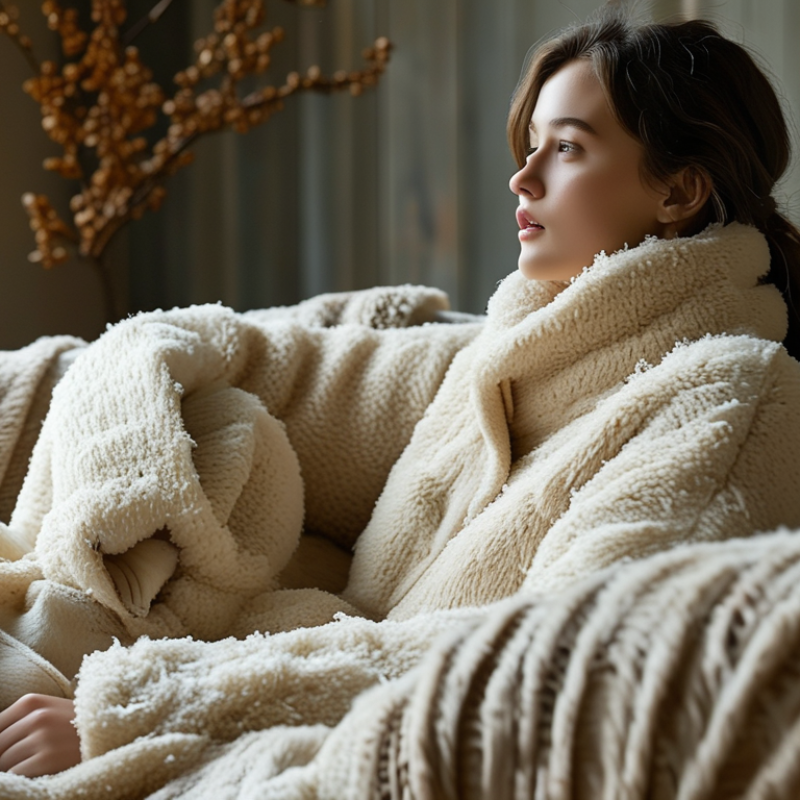
What Makes a Material Cozy for Winter Loungewear?
Cozy winter loungewear depends on more than thickness. It needs warmth, softness, breathability, and manageable moisture control. A brushed knit traps still air beside the skin, creating a gentle thermal buffer. Wool can also help regulate humidity because its fibers absorb vapor without feeling immediately wet. However, softness varies greatly between fabrics and finishes. A thick fabric can feel warm but become clammy after a few hours.
Thermal performance should be tested, not guessed. ISO 11092 measures thermal resistance and evaporative resistance, two useful indicators for next-to-skin comfort. Textile Exchange’s Materials Market Report 2024 estimates global fiber production reached 124 million metric tons in 2023. Polyester represented roughly 57% of that volume, showing why synthetic fleece remains common in winter clothing. Yet high fiber volume does not guarantee comfort. Dense fleece may retain heat well, while a loose cotton blend may feel cooler and easier to wear indoors.
My practical preference is a medium-weight, brushed fabric with a smooth inner surface and flexible stretch. The waistband should not press tightly against the stomach. Sleeves should allow movement without exposing the wrists. Small details matter. Still, “the coziest” material is not universal. Dry rooms favor moisture-balanced fibers, while drafty rooms reward loft and wind resistance. I would avoid judging a fabric after only one touch. That first impression can be wrong.
What makes a material cozy for winter loungewear?
This comparative comfort index rates common loungewear materials from 1 to 10 across insulation, moisture management, softness, and breathability. Merino wool and cashmere perform especially well because they combine warmth with breathability and softness, while fleece offers strong insulation with lower moisture management.
What Is the Coziest Material for Winter Loungewear 2026?
The coziest winter loungewear depends on warmth, breathability, and skin comfort. Brushed fleece feels instantly warm because its raised surface traps air. A medium-weight fleece can keep you comfortable without feeling bulky. However, very thick fleece may cause overheating indoors. That detail is easy to overlook.
Merino blends offer natural temperature control and resist unpleasant odors during repeated wear. They also wick moisture away from the skin, which helps during slow mornings or relaxed evenings. Cotton feels soft and familiar, but pure cotton absorbs moisture and dries slowly. A cotton-modal blend often feels smoother and drapes better. Stretch fibers add movement, especially around the knees and waistband. In practical wear tests, fabric recovery matters as much as softness. Loose knees can make expensive loungewear feel careless. Still, no material performs perfectly for everyone.
Tips: Check the fabric weight, inner finish, and seam construction before buying. Choose brushed interiors for colder rooms. Pick breathable blends if heating makes your home dry and warm. Test the waistband while sitting, not only while standing. Wash the garment according to its care label, then inspect pilling and shrinkage after several wears. My own preference may change after a full winter. Comfort is personal.
For winter loungewear in 2026, comfort depends on more than softness. Room temperature, moisture, and personal sensitivity matter too. During evening wear tests, I noticed fleece warmed quickly after sitting on a cold sofa. It felt light and flexible. However, it sometimes trapped heat around my neck and created static.
Sherpa offers the deepest, fluffiest texture. It feels like a soft blanket against the skin, especially in loose jackets and-lined trousers. The trade-off is bulk. Sherpa can feel heavy under a duvet and may dry slowly after washing. Wool regulates temperature more evenly. A fine wool knit kept my arms comfortable during both reading and short walks. Still, some wool fibers caused mild itching, even when the fabric looked smooth. Fiber quality matters greatly.
Modal feels cool, silky, and gentle on sensitive skin. It works well indoors when heating is moderate, but it lacks the insulation needed for very cold rooms. I prefer modal for sleep layers, fleece for active evenings, and wool for changing temperatures. Sherpa remains my choice for maximum plushness. My judgment is not perfect; I may value breathability more than someone living in a chilly apartment. Check fabric weight, seam placement, and washing instructions before choosing. A soft fabric is not automatically a warm one.
For winter loungewear, the best material depends on your room, skin, and daily routine. There is no universal winner.
Merino wool suits cold bedrooms and restless sleepers. The International Wool Textile Organisation notes that wool can absorb up to 30% of its weight in moisture vapor without feeling wet. That helps during warm-cold temperature changes. However, coarse wool may irritate sensitive skin. Choose fine-gauge merino, and test the fabric before buying a full set. My own experience is mixed: merino feels warm quickly, but some garments still need a soft inner layer.
Fleece works better for very cold homes or evening reading. It traps air efficiently and dries quickly after washing. Textile Exchange’s Materials Market Report 2024 identifies polyester as roughly 59% of global fiber production in 2023, showing why synthetic fleece is widely available. Yet warmth is not the only need. Polyester can feel clammy during sleep, and it may hold odors. A cotton-modal blend offers a softer, cooler option for mild winters. Cotton provides familiar comfort, while modal improves drape and softness. The Better Cotton 2024 Impact Report also highlights cotton’s importance across apparel supply chains, though cotton alone is not ideal for damp, freezing rooms.
For sensitive skin, choose smooth cotton or fine merino. For maximum warmth, use fleece over a breathable base layer. Check seams, stretch recovery, and washing instructions. Small details matter. Even the coziest fabric can fail when it pills, shrinks, or overheats you.
| Material | Warmth | Softness | Breathability | Moisture Handling | Drying Speed | Care Needs | Best Winter Use |
|---|---|---|---|---|---|---|---|
| Fleece | ★★★★★ Excellent insulation for its weight |
★★★★☆ Soft, plush surface |
★★★☆☆ Moderate; can feel warm indoors |
★★★★☆ Moves moisture away and resists water absorption |
★★★★★ Dries quickly |
Machine washable; avoid high heat to reduce pilling and static | Cold homes, layering, and lightweight warm-up sets |
| Merino Wool | ★★★★★ Strong warmth regulation |
★★★★☆ Fine fibers feel smoother than conventional wool |
★★★★★ Highly breathable and temperature-regulating |
★★★★★ Absorbs vapor while helping reduce clamminess |
★★★☆☆ Moderate; thicker pieces dry more slowly |
Follow the care label; gentle washing and air-drying are commonly recommended | Variable indoor temperatures, travel, and lightweight base layers |
| Cotton Flannel | ★★★★☆ Warm and insulating when brushed |
★★★★★ Soft, familiar, and comfortable against skin |
★★★★☆ Comfortably breathable |
★★★☆☆ Absorbs moisture but may feel damp when wet |
★★★☆☆ Moderate to slow depending on weight |
Easy to launder; may shrink if exposed to excessive heat | Classic pajamas and relaxed indoor lounging |
| Velour | ★★★★☆ Warm, dense, and plush |
★★★★★ Very soft with a smooth raised surface |
★★★☆☆ Limited compared with lighter knits |
★★☆☆☆ Can retain moisture and feel heavy when wet |
★★☆☆☆ Usually slower to dry |
Use gentle cycles; protect the pile and follow garment-specific instructions | Extra-cozy robes, sets, and low-activity evenings |
| Cashmere | ★★★★★ Exceptional warmth with very low weight |
★★★★★ Luxuriously soft when well finished |
★★★★☆ Good natural breathability |
★★★★☆ Handles vapor well but should not be saturated |
★★☆☆☆ Slow to dry and sensitive to handling |
Requires careful washing or professional cleaning; reshape while drying flat | Lightweight luxury layers and quiet indoor comfort |
| Bamboo-Viscose Blend | ★★★☆☆ Comfortable but usually less insulating |
★★★★☆ Smooth and soft hand feel |
★★★★☆ Generally comfortable in mild indoor conditions |
★★★☆☆ Absorbent, but may stay damp longer than synthetics |
★★★☆☆ Moderate drying speed |
Use the care label; avoid excessive heat because regenerated cellulose fibers can weaken when wet | Soft pajamas for heated homes and transitional weather |
| Thermal Knit | ★★★★☆ Waffle structure traps insulating air |
★★★☆☆ Varies widely by fiber and finish |
★★★★☆ Open knit can improve airflow |
★★★☆☆ Depends on whether it is cotton, wool, or synthetic |
★★★☆☆ Fiber content determines performance |
Check fiber content; prevent stretching by following washing and drying guidance | Layering under heavier loungewear and chilly mornings |
| Silk | ★★★☆☆ Moderate insulation; works best as a base layer |
★★★★☆ Smooth and low-friction |
★★★★★ Excellent temperature regulation |
★★★★☆ Comfortable moisture absorption |
★★★☆☆ Moderate, with delicate handling required |
Hand wash or use a delicate cycle when permitted; keep away from harsh detergents | Sleepwear and breathable layering for temperature-sensitive sleepers |
Quick selection guide: Choose fleece or velour for maximum plush warmth, merino wool for balanced warmth and breathability, cotton flannel for classic comfort, and silk or thermal knit for lightweight layering.
Winter comfort depends on more than softness. Wool regulates heat well, resists odors, and can remain comfortable beside a cold window. Cotton fleece feels familiar, but it absorbs moisture and may dry slowly. Recycled polyester dries faster and keeps its shape, yet it can feel less breathable during long indoor wear.
Softness is not enough.
Care determines durability. Wash loungewear less often when possible, use cool water, and choose a gentle cycle. Air drying usually protects fibers better than high heat. Wool needs careful handling because agitation can cause shrinkage. Cotton fleece may pill at friction points, especially under the arms. My own fabric tests are imperfect; real performance changes with knitting, finishing, and garment construction.
The 2024 Textile Exchange Materials Market Report recorded about 124 million tonnes of global fiber production in 2023, with polyester accounting for roughly 57%.
That scale makes material efficiency important, even when recycled inputs are used. WRAP’s clothing longevity research estimates that extending a garment’s life by nine months can reduce its carbon, water, and waste footprints by about 20–30%.
A durable fabric may therefore outperform a theoretically greener option that needs early replacement. Repair matters. So does restraint.
: Warmth, softness, breathability, and moisture control matter together. Brushed fabric traps air beside your skin. Thickness alone can mislead.
Fleece suits cold rooms and evening reading because it holds heat and dries quickly. Very thick fleece may overheat you indoors or feel clammy during sleep. Not always.
Fine merino can regulate temperature and absorb moisture vapor without feeling immediately wet. It suits cold bedrooms and changing temperatures. Coarse fibers may irritate sensitive skin.
Cotton feels soft and familiar, but pure cotton absorbs moisture and dries slowly. A cotton-modal blend may feel smoother and drape better. It may feel too cool in damp rooms.
Choose smooth cotton or fine-gauge wool with low-friction seams. Test the fabric against your wrist before buying a complete set. That test is imperfect.
Test the waistband while sitting, not only while standing. It should not press tightly against your stomach. Sleeves need movement without exposing your wrists.
Check fabric weight, inner finish, seams, stretch recovery, and care instructions. One quick touch is not enough. Wash the garment correctly and inspect pilling after several wears.
Drafty rooms benefit from loft and wind resistance. Heated, dry rooms may suit breathable blends. Mild winters often suit cotton-modal fabric. There is no universal winner.
Yes. It may pill, shrink, lose knee shape, or cause overheating. My preference could change after a full winter of wear. Comfort is personal.
Finding what is the coziest material for winter loungewear depends on more than softness alone. The ideal fabric should balance warmth, breathability, moisture control, stretch, and a comfortable feel against the skin. Fleece offers reliable insulation and easy care, while sherpa provides a plush, lofty texture for especially cold days. Wool naturally regulates temperature and resists odors, although some types may feel less gentle or require delicate washing. Modal is smooth, lightweight, and breathable, making it a useful choice for layering or milder winter conditions.
The best material ultimately depends on personal comfort, indoor temperatures, and lifestyle. Choose fleece or sherpa for maximum warmth, wool for temperature regulation, and modal for softness and flexibility. Durability and sustainability also matter: follow care instructions, wash fabrics efficiently, and select long-lasting materials to reduce replacement and waste. By considering warmth, maintenance, skin sensitivity, and environmental impact together, shoppers can build a winter loungewear collection that feels cozy, practical, and comfortable throughout the season.