Choosing florals for a formal wedding can feel surprisingly difficult. The print may look romantic online, yet appear louder under bright venue lighting. Formal dressing requires balance between color, fabric, shape, and polish. This guide explains how to style a floral dress for a formal wedding without losing personal character.
A successful outfit often begins with the invitation’s dress code. A floor-length or midi dress in silk, satin, chiffon, or structured crepe usually feels more refined than lightweight cotton. Dark botanical prints can suit evening ceremonies, while softer florals may work for daytime celebrations. Still, these are guidelines, not strict rules. A beautifully cut dress can sometimes look more formal than an expensive fabric with poor fit.
The seven styling ideas explore practical choices for shoes, jewelry, outer layers, handbags, hair, makeup, and finishing details. Think of pointed satin heels, a small metallic clutch, or pearl earrings that echo one flower in the print. A tailored blazer can add authority, while a delicate wrap may soften the silhouette. Details matter. Even pressed fabric and clean shoes can transform the final impression.
Personal experience also matters. Some floral dresses crease quickly, and some bold patterns overwhelm delicate accessories. A test fitting in natural light can reveal problems before the ceremony. Movement should be checked, too. Walk, sit, and lift the handbag. If the outfit feels beautiful but restrictive, it may need revision. Formal style should look intentional, yet still allow comfortable conversation, dining, and dancing.
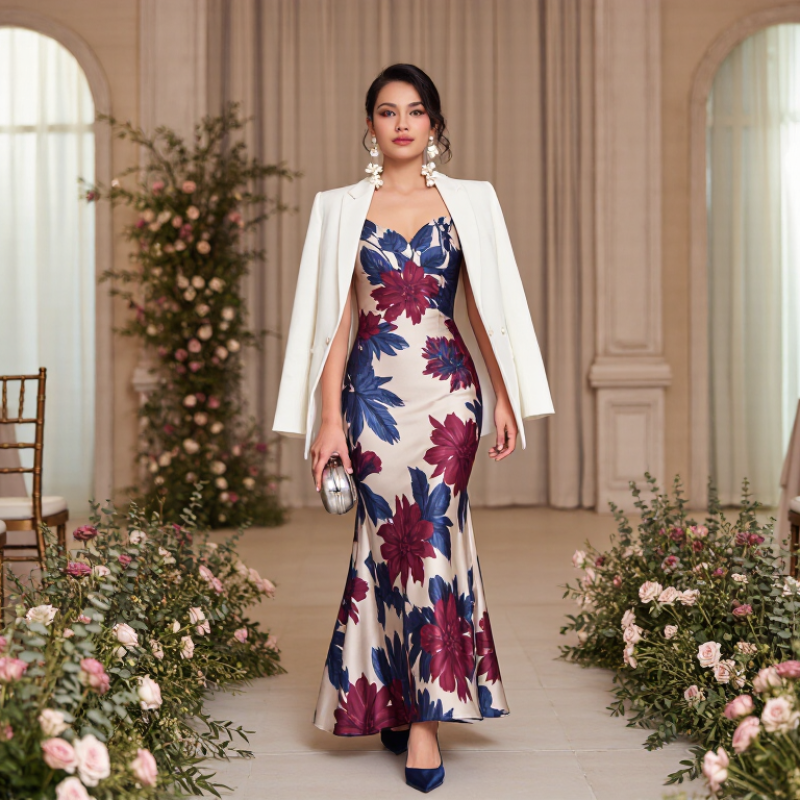
Choosing the Right Floral Dress for a Formal Wedding
A floral dress can look formal when its structure feels intentional. A 2024 Real Weddings Study, based on more than 17,000 couples, reported an average guest count of 117 in the United States. Larger celebrations often reward polished details. Choose a dark base, restrained flowers, and a defined silhouette. A midi or floor-length hem usually feels more appropriate than a short, playful cut. Silk, crepe, or lined chiffon can also create a cleaner finish.
Use seven practical checks before buying. Match the print scale to your frame. Select colors that complement the wedding season. Choose sleeves or a wrap for a ceremony setting. Check the dress under indoor lighting. Test whether the fabric wrinkles after sitting. Add refined shoes and simple metal jewelry. Keep the handbag structured and small. Not every floral print needs extra decoration. Sometimes, less works better.
Formal does not mean uncomfortable. The 2024 U.S. wedding market report also recorded substantial guest spending, so guests often move between ceremonies, dinners, and photographs. Choose a dress that allows walking and sitting without constant adjustment. A fitting-room lesson is easy to miss: beautiful fabric cannot rescue poor movement. I would rather accept a slightly imperfect print than wear a stiff dress all evening. Check the invitation carefully, because “formal” can still vary by venue, climate, and cultural expectations.
| No. | Styling Approach | Best Dress Choice | How to Style It | Recommended Accessories | Avoid |
|---|---|---|---|---|---|
| 1 | Choose a Dark Floral Base | A floor-length or midi dress with a navy, burgundy, forest-green, or deep plum background | A darker base creates a polished, evening-appropriate appearance while allowing the floral pattern to remain the focal point. | Metallic sandals, a structured clutch, and understated drop earrings | Very bright casual accessories or large daytime tote bags |
| 2 | Select an Elegant Silhouette | A wrap, fit-and-flare, column, or softly draped gown with a defined shape | Clean lines and refined tailoring help a floral print look formal rather than casual. Choose a length and neckline that suit the wedding dress code. | Pointed-toe heels, a slim belt, and a small evening bag | Beachwear details, oversized pockets, or an overly relaxed jersey shape |
| 3 | Use Minimal Metallic Accents | A dress with one or two accent colors that can be echoed in jewelry or shoes | Gold, silver, or rose-gold accents add formality without competing with the floral design. Repeat one metallic tone for a coordinated finish. | Delicate earrings, a metallic clutch, and simple strappy heels | Mixing several metallic finishes or wearing statement jewelry with a busy print |
| 4 | Add a Tailored Layer | A sleeveless or short-sleeved floral dress suitable for an evening or cool-weather ceremony | A cropped blazer, elegant shawl, or tailored wrap provides warmth and gives the outfit a more structured formal appearance. | A solid-color layer that matches the dress background, plus refined pumps | Bulky cardigans, sporty jackets, or layers with a competing print |
| 5 | Balance the Print with Solid Shoes | A medium or large floral print with several visible colors | Solid shoes visually ground a statement dress. Choose a neutral or a shade pulled directly from the flowers for a seamless look. | Nude, black, metallic, or deep-color pumps and a matching compact clutch | Highly embellished shoes or another bold pattern on the accessories |
| 6 | Refine the Look with Formal Fabrics | Floral dresses made from silk, satin, chiffon, velvet, crepe, or quality lace | A fabric with elegant drape or subtle sheen elevates the floral motif and is generally more suitable for a formal wedding than lightweight casual cotton. | Pearl or crystal accents, polished heels, and a structured evening bag | Wrinkled fabric, visible casual jersey styling, or everyday canvas accessories |
| 7 | Keep Hair and Makeup Balanced | Any floral dress, especially one with a colorful or detailed pattern | A sleek updo, soft waves, and controlled makeup keep attention on the dress. Select one feature—lips, eyes, or earrings—as the main accent. | A refined hairstyle, luminous skin, and makeup in tones that complement the flowers | Overly dramatic hair accessories or makeup colors that clash with the print |
Yes, when the fabric and silhouette feel polished. Choose satin, chiffon, crepe, or a lined material. Avoid thin cotton unless the invitation permits casual clothing.
Small, balanced flowers often appear elegant. A dark background can calm bright petals. Large flowers can work with a simple, tailored shape.
Choose a defined waist, clean neckline, and knee-length or longer hem. A tailored jacket can add structure. It may also hide too much beauty.
Avoid patterns dominated by white. They may look too close to bridal clothing. Check cultural, religious, and venue expectations before choosing the dress.
Pointed-toe pumps, refined sandals, or stable slingbacks add polish. Choose a small satin, leather, or beaded clutch. Match the bag to the dress’s strongest color.
Choose one main jewelry detail, such as pearl earrings or a slim bracelet. Large flowers need delicate jewelry. Small prints can handle bolder earrings.
Choose breathable lining and shoes you can walk in. Check the venue surface before wearing thin heels. Carry blister cushions and a compact comb.Comfort matters.
Reveal the neckline with a low chignon or soft waves. Use a fresh base, defined eyes, and a contrasting lip. Water-resistant makeup helps during long ceremonies.
Steam the dress and photograph the outfit in daylight. Outdoor sunlight may make quiet colors look surprisingly loud. Remove one unnecessary accessory before leaving.The necklace might be it.
Learning how to style a floral dress for a formal wedding begins with choosing a refined silhouette, sophisticated fabric, and an appropriate print. Look for balanced colors, elegant proportions, and a length that suits the formality of the celebration. To keep the floral pattern polished, pair it with simple, well-fitted accessories in complementary or neutral tones. Elegant shoes, a structured clutch, and delicate jewelry can enhance the outfit without competing with the dress.
Seasonal layering also helps create a complete formal look. A tailored jacket, graceful wrap, or lightweight shawl can add warmth and sophistication while preserving the dress’s shape. Finish with a neat hairstyle and makeup that complements the colors of the floral print, keeping the overall appearance fresh rather than overly dramatic. Thoughtful details such as understated hair accessories, refined fabrics, and comfortable yet polished footwear will help create a confident, wedding-appropriate ensemble.

 Bever Beauty