A maxi dress can feel elegant on a petite frame, yet the wrong hem or waistline may hide your shape. The solution is not to avoid long dresses. It is to guide the eye with proportion, fit, and a few considered details. A waist seam that sits naturally, a clean column of color, or a hem skimming the ankle can make a noticeable difference. Small adjustments matter.
McKinsey and The Business of Fashion’s The State of Fashion 2024 report describes shoppers placing greater emphasis on value. That makes versatility worth considering: a well-fitting maxi dress should work with more than one pair of shoes or one occasion. Fashion consultant Tim Gunn’s familiar advice, “Make it work,” is not a petite-styling rule, but it suits the process: adapt a silhouette to your proportions rather than forcing yourself into a trend. For anyone wondering how to style a maxi dress for petite frames, start with the actual garment. Check where its waist falls, whether the fabric pools at your shoes, and how a cropped jacket changes the outline. A tailor can shorten a hem while preserving its shape. Try the dress with the shoes you expect to wear. Then look again. Sometimes the mirror still says no. That is useful information, not a styling failure.
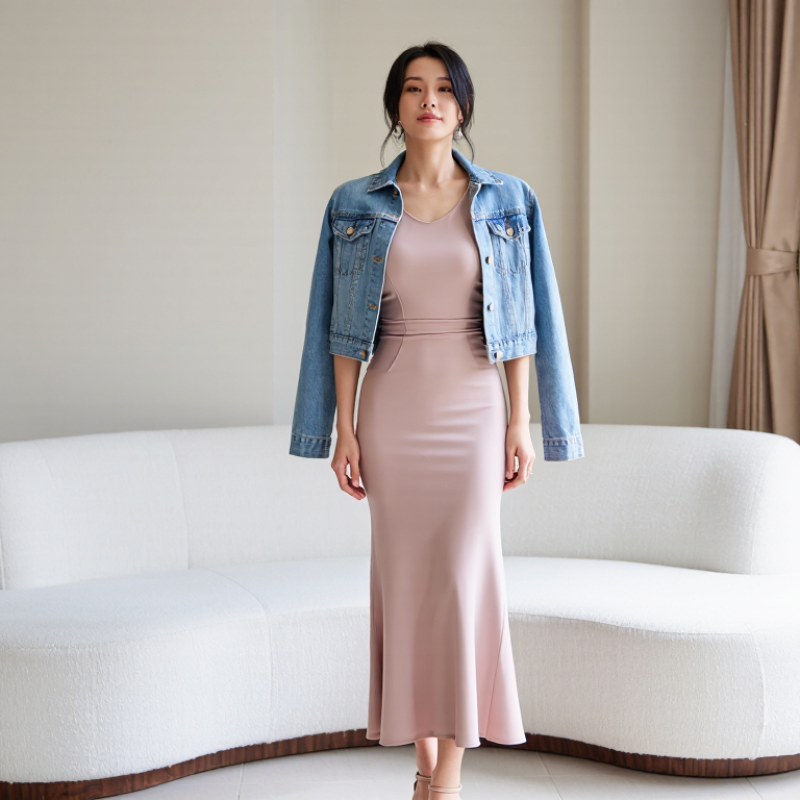
For petite frames, a maxi dress works best when its proportions feel intentional. Look for a waist seam near your natural waist, rather than one that sits low and lengthens the torso visually. A defined waist, shaped seams, or a narrow belt can create balance without adding bulk. The hem should skim the floor with your usual shoes, not pool around your feet. Even a small fold of extra fabric can make the whole outfit feel heavier.
Pay attention to the scale of the details. A very wide skirt, oversized print, or thick strap may compete with a smaller frame. That does not mean you need tiny patterns or fitted styles; it means checking how each feature relates to your shape. A slit or a column-like silhouette can show more leg and create a longer line. It is easy to blame height when a dress feels off, but often the waist placement or hem is the real issue. And sometimes the “perfect” fit still needs a small alteration.
Tips: Try the dress with the shoes you plan to wear. Check the hem from the side, too. If the waist seam sits low, a simple belt may help—but not always. Small shifts matter.
A petite-friendly maxi dress starts with its shape, not just its size label. A gently fitted waist and a narrow, uninterrupted skirt usually keep the silhouette defined. A useful starting point. The CDC’s 2015–2018 National Health and Nutrition Examination Survey reported an average height of 161.3 cm (63.5 inches) for U.S. women aged 20 and over. That figure describes a population average, not a petite-size cutoff; body proportions vary widely. Check your own shoulder-to-waist and waist-to-hem proportions before choosing a cut. An empire waist can lengthen the look, but a very high seam may feel awkward if your torso is short.
Length matters just as much. Try the dress with the shoes you plan to wear, then check where the hem falls. A hem grazing the top of the foot can create a clean line without dragging. Leave enough clearance to walk comfortably. If hemming is needed, preserve the original shape of the skirt where possible; a heavy or uneven alteration can change its movement. Avoid relying on a single “petite rule.” I still find this part imperfect: a floor-skimming hem can look elegant in a fitting room, then catch underfoot on stairs. Test the stride, sit down, and check the hem in natural light.
Creating a longer line with a maxi dress is less about looking taller and more about avoiding visual breaks. A single-color dress can help the eye travel smoothly from shoulder to hem. Try deep teal, soft black, or warm ivory, then keep shoes close to the dress color. Even a narrow strip of contrasting skin at the ankle can interrupt that effect.
If you prefer prints, look for small, evenly spaced motifs or subtle vertical details. A cropped jacket in a similar shade can define the waist without cutting the outfit into stark blocks. High-waisted styles often work well, but the waist seam should sit comfortably, not ride up. Check the hem while wearing your usual shoes; fabric pooling around your feet can overwhelm a petite frame. A small heel is optional.
Keep accessories in proportion. A slim belt, delicate earrings, or a compact shoulder bag can add interest without competing with the dress. I used to think a long necklace always lengthened an outfit, but a pendant that lands at the waist can draw attention sideways instead. The mirror test helps. Step back and notice where your eye pauses. If the dress feels too plain, add one clear point of contrast, such as a textured bag or a light scarf, rather than several competing accents. Some days, the simpler version still feels a little unfinished. That is worth noticing, not automatically fixing.
For a petite frame, shoes can quietly change how a maxi dress reads. A low-vamp sandal or pointed flat leaves more of the foot visible, creating a longer visual line beneath the hem. Choose a sole close to your skin tone or dress color for a calmer transition. If the skirt nearly brushes the floor, check the hem while wearing your actual shoes. A puddling hem looks romantic, but it can be awkward on stairs.
Comfort matters as much as proportion. The American Podiatric Medical Association’s 2014 survey found that 71% of women who wore high heels reported foot pain. A stable block heel, cushioned flat, or modest wedge can add lift without demanding a whole day of discomfort. Keep the shoe visually light: bulky ankle straps may divide the leg line. Still, a chunky sandal can work with a substantial fabric; styling rules are not magic.
Accessories should balance, not compete. Try a small crossbody bag worn high, or a compact shoulder bag that ends above the hip. Long necklaces draw the eye vertically, while oversized earrings can bring attention upward. Avoid stacking every statement at once. One detail is enough. I’d test the full outfit in a mirror from several steps away; close-up styling can make a tiny accessory look larger than it feels in motion.
A maxi dress should skim the floor, not drag across it. Try it on with the shoes you expect to wear, then mark the hem while standing naturally. Keep a little clearance for stairs and uneven pavement. A hem that looks perfect barefoot may sit too high with a heel.
Check the waist and shoulder fit before shortening the skirt. If the waist seam falls low, a tailor may be able to raise it, but the bodice construction can limit adjustments. Slimming side seams can reduce excess fabric without making the dress feel tight. For thin straps, small adjustments may change the neckline, so pin and check before cutting. Stand. Sit. Walk. Notice whether the fabric pulls, twists, or bunches.
Make one alteration at a time. It is tempting to remove extra length and take in the waist in one fitting, but that can make the proportions harder to judge. I sometimes find that a slightly relaxed fit looks better than a perfectly close one; comfort is easy to overlook under bright fitting-room lights. Recheck the dress in daylight, and bring your usual shoes to the final fitting. A few careful adjustments can make the shape feel personal without losing its easy movement.
Practical starting ranges in inches for adjusting a maxi dress. Actual alterations depend on your height, proportions, shoes, and the dress design.
Pin the dress while wearing the shoes you plan to pair with it, then measure before hemming or taking in seams. Start with the smallest adjustment that creates a clean, comfortable fit.
A seam near your natural waist often creates better balance. A slim belt may help if it sits too low, but not always.
Try it with your usual shoes. The hem should skim the floor without dragging or pooling around your feet.
Look at your shoulder-to-waist and waist-to-hem proportions. A narrow skirt and gently defined waist can keep the shape clear.
It can create a longer-looking line. If your torso is short, though, a very high seam may feel awkward.
Small, evenly spaced prints and subtle vertical details can work well. Oversized patterns or thick straps may compete with a smaller frame.
A single-color dress can guide the eye from shoulder to hem. Shoes close to the dress color keep that line more continuous.
Try a slim belt, delicate earrings, or a compact shoulder bag. One clear accent is often enough. More can feel busy.
Walk, sit, and check the hem in natural light. I still find this tricky: a floor-skimming hem can catch on stairs. Small shifts matter.
Learning how to style a maxi dress for petite frames starts with finding a fit that respects your proportions. Look for a silhouette that defines the waist and falls smoothly rather than overwhelming your shape. The right hem length is equally important: a dress that skims the floor with your chosen shoes can create a polished, elongated effect, while excessive fabric may make the overall look feel heavy.
To create a longer visual line, consider wearing similar tones from head to toe or choosing a dress with a simple, uninterrupted pattern. Shoes with a low profile or a modest heel can complement the hem without distracting from the outfit. Keep accessories balanced and thoughtfully scaled, so they add interest without competing with the dress. If needed, adjust the straps, waist, or hem for a clean, personalized fit that feels comfortable and tailored to you.
